

The Resort Days (Where We Finally Stop Moving)
A Bucket List Trip, Powered by AI | Part Five

Last year, I planned a bucket list vacation with the help of AI… a 25th anniversary trip five years in the making. This is Part 5 of a six-part series about planning, adventure, manta rays, and learning to think out loud with a machine. Start from the beginning here.
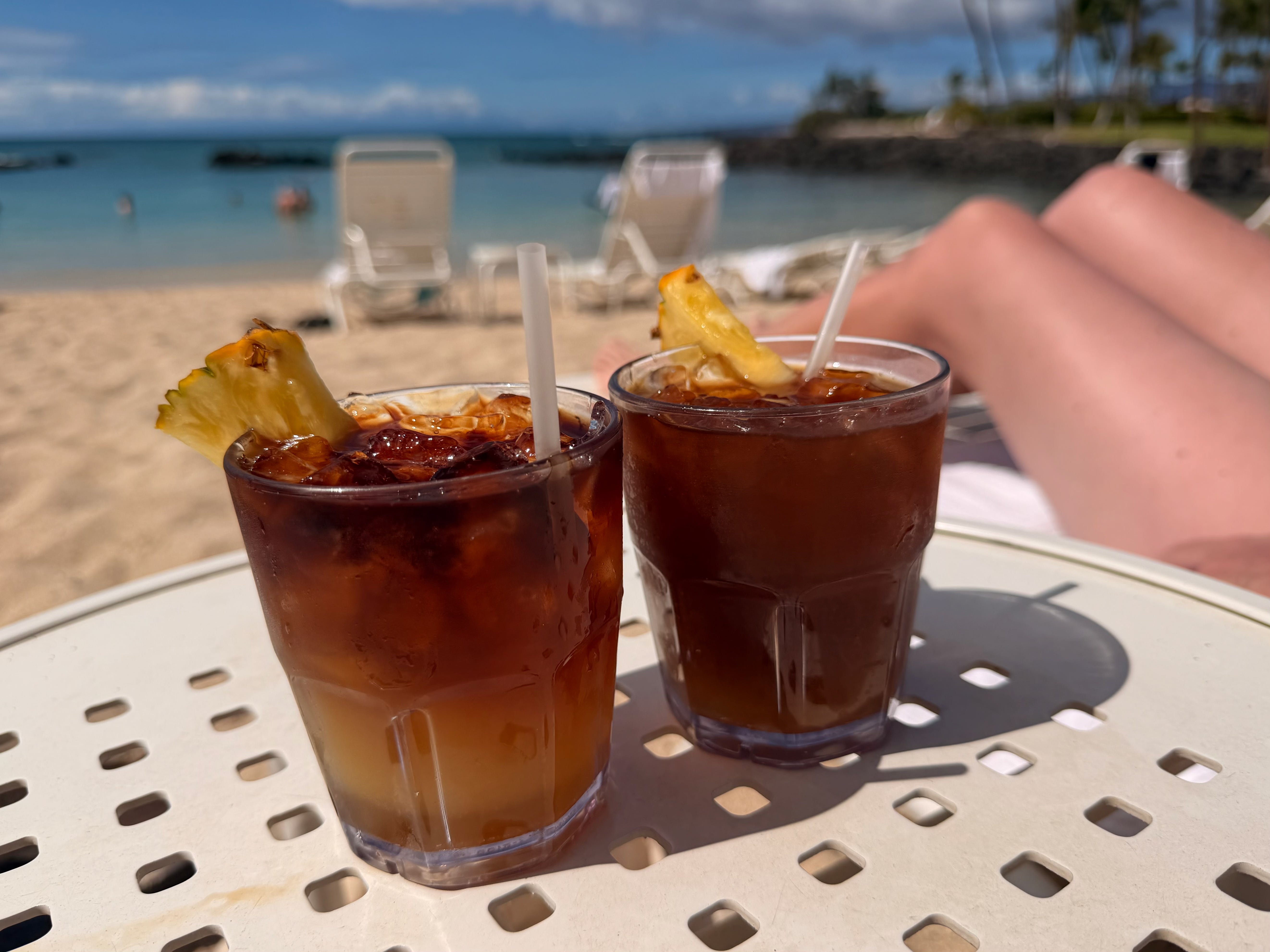
We arrived at the Fairmont Orchid after our drive from Volcano and tour up the eastern coast with just over an hour to spare before dinner. We’d made the reservation at Brown’s Beach House weeks in advance, timed specifically for sunset.
ChatGPT had helped with that timing... not just picking a restaurant, but figuring out when the sun would actually set so we could request a table at the right time. Brown’s Beach House sits right on the water, and we got a table up front, closest to the beach.
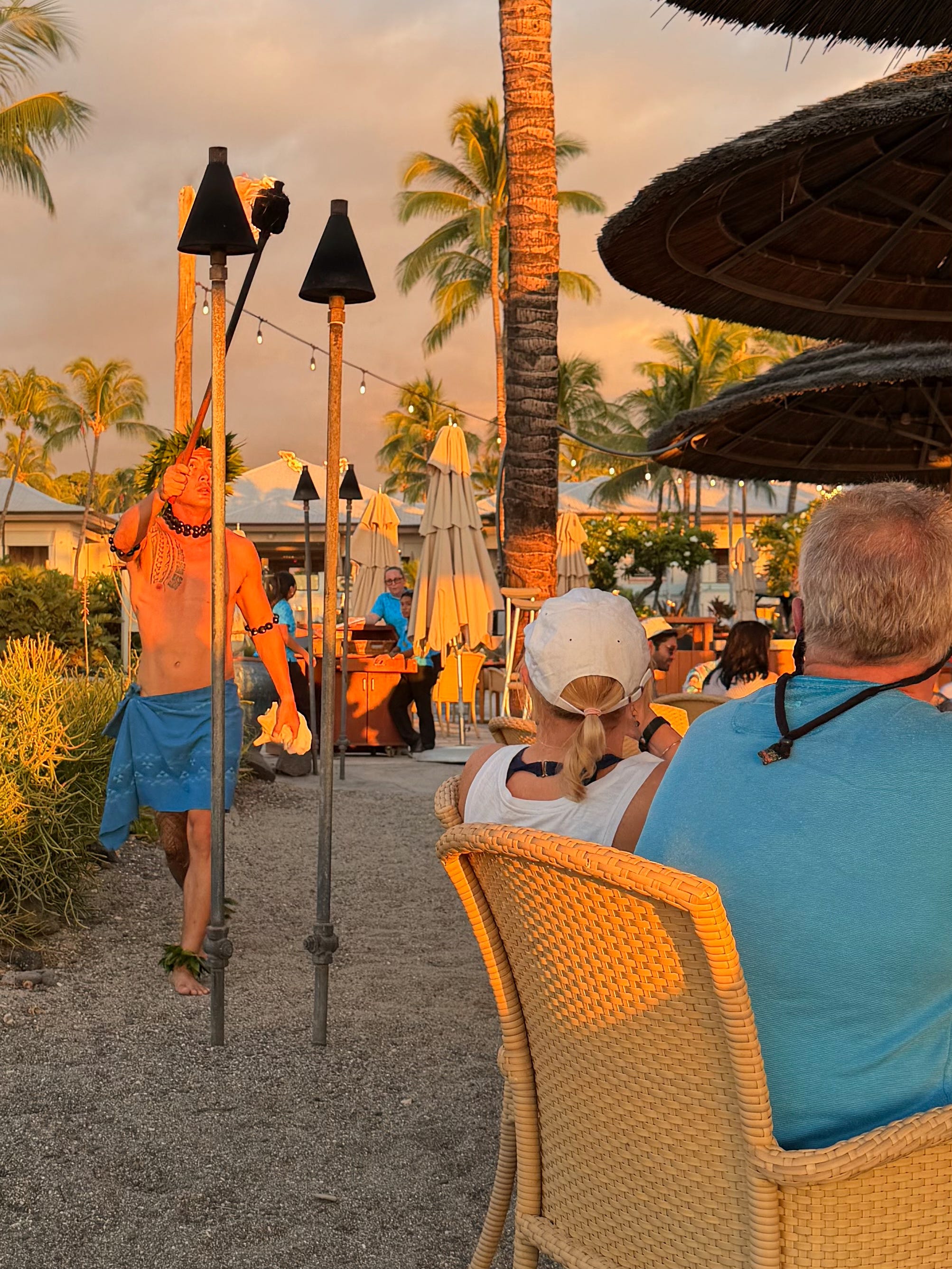
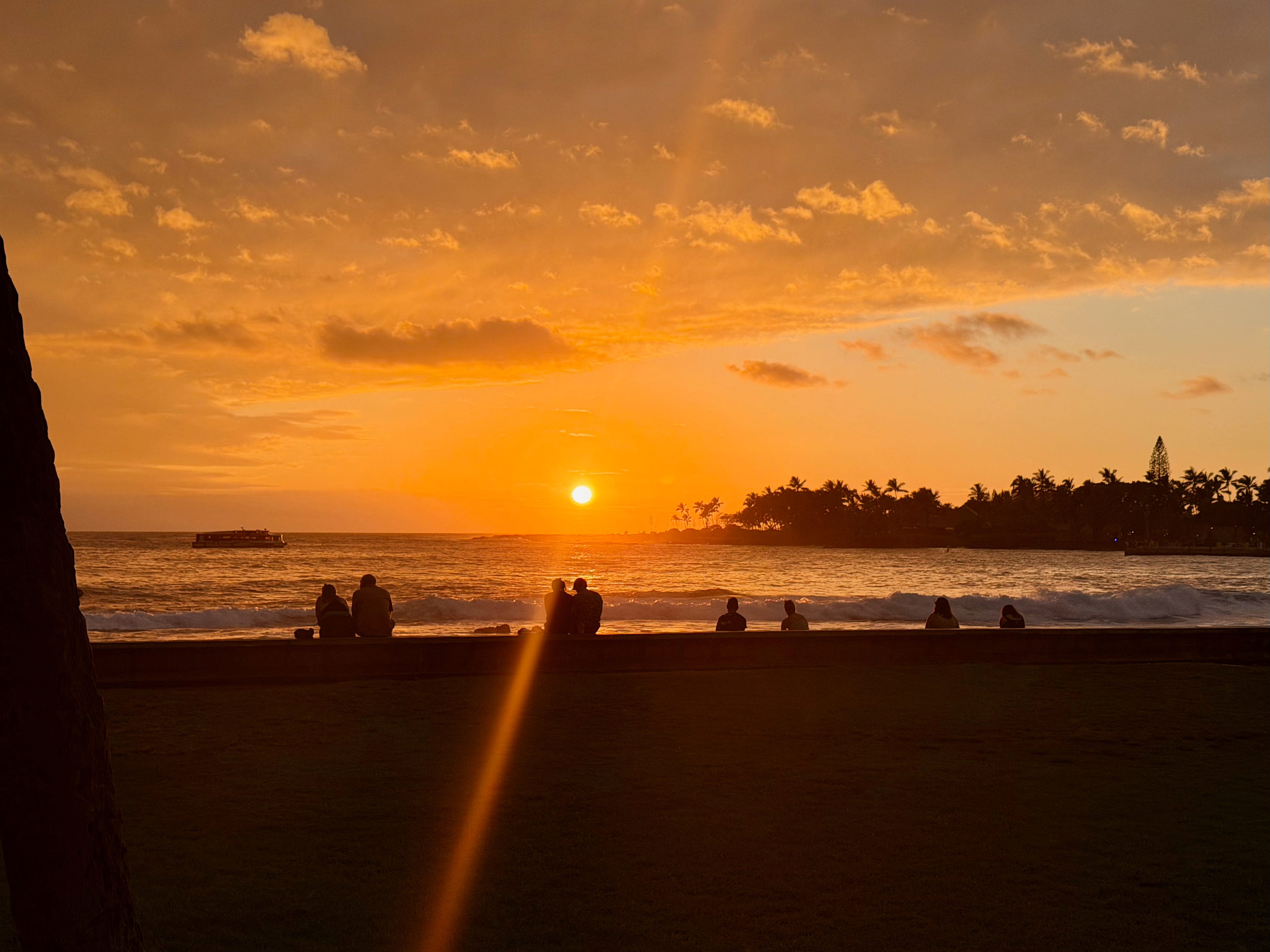
The sun dropped slowly over the ocean, painting everything gold and orange. Torches were lit along the pathways. The pū ceremony began... a conch shell blown to mark the sunset, a small ritual the resort did every evening. We sipped our cocktails and watched it all unfold.
I ordered that night’s special... ti leaf-steamed local fish, opened tableside with a light coconut-ginger sauce, paired with island fried rice. Nicole went with the macadamia nut-crusted local fish, one of Brown’s signatures. We shared a bottle of Penner-Ash Pinot Noir.
For dessert, they brought us crème brûlée topped with pineapple and whipped cream, complete with a tiny sign wishing us a happy anniversary.


It was the splurge meal. The one we’d been planning toward. And it was perfect.
This was the moment the entire trip had been building toward... twenty-five years, and here we were, watching the sun set over the Pacific, exactly where we were supposed to be.
Wednesday morning started early. The six-hour time difference with home meant we were wide awake by 6 a.m., which worked out perfectly since we’d booked an outrigger canoe and snorkeling tour for 7:30.
Just us and a guide.
But the night before, I’d tried to set up the GoPro and realized: no SD card. We’d bought the camera and all the accessories back in Hilo, but I’d completely forgotten the one thing that actually makes it work!
So the next morning, we met our guide at the beach knowing we’d have to make a Target run afterward if we wanted any underwater footage for the rest of the trip.
The canoe was modern but built in the traditional style... sleek, stable, with an outrigger on one side. Our guide sat in back, steering and telling us about growing up on the island, fishing with his family. He mentioned a school trip to Volcano when he was younger, but said that area was way too cold for him. He was a coast guy through and through.
We paddled south along the coast, past other resorts and rocky shoreline, until we reached a small bay.
He tied us to a mooring buoy and we slipped into the water.
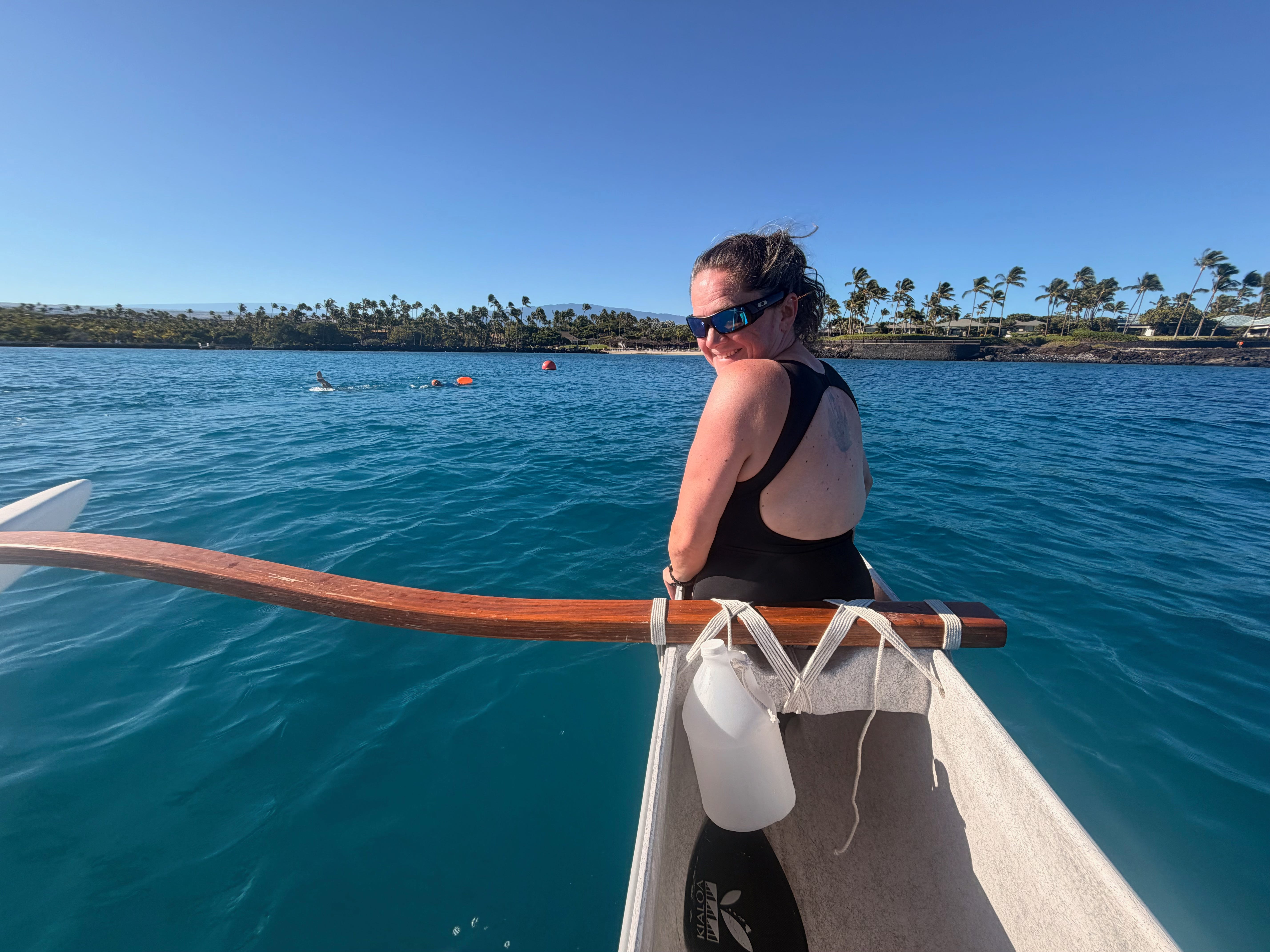
This was why we’d brought our own snorkeling gear. The masks fit better. The fins were longer, which meant we could move through the water without working as hard. And we could see everything clearly.
The water was mostly clear except for pockets where freshwater flowing through lava tubes from the mountains mixed with the salt water. You could feel it immediately when you hit those spots... suddenly much colder.
We saw schools of bright yellow tangs, parrotfish, triggerfish, and some kind of ray gliding along the bottom. Our guide pointed out coral formations and explained which fish were native and which had been introduced.
After about forty-five minutes, we climbed back into the canoe and paddled back to the resort. He gave us recommendations for lunch spots in Kona... good local places, not tourist traps... and we thanked him and headed back to the room to change.
Time for the Target run.
We drove back to Kona, found the other Target, and finally bought the SD card. Nicole pointed out that we’d now been to all the Targets on the Big Island! It felt like a weird accomplishment, but we were claiming it anyway.
Then we stopped at Umekes Fish Market Bar & Grill for fish tacos, exactly as our guide had recommended.
They were excellent.
We got back to the resort mid-afternoon and I finally got to test the GoPro in the water. I swam around the resort beach, filming fish and coral and getting used to the controls. The footage looked great. I felt vindicated for the two-Target odyssey.
That evening we grabbed a table at the Hale Kai... the poolside bar and restaurant right next to Brown’s Beach House. Another front-row seat for the sunset. Another pū ceremony as the torches were lit. Another perfect end to the day.
Then it was off to swim with the Manta Rays.
Thursday morning, we were up early again.
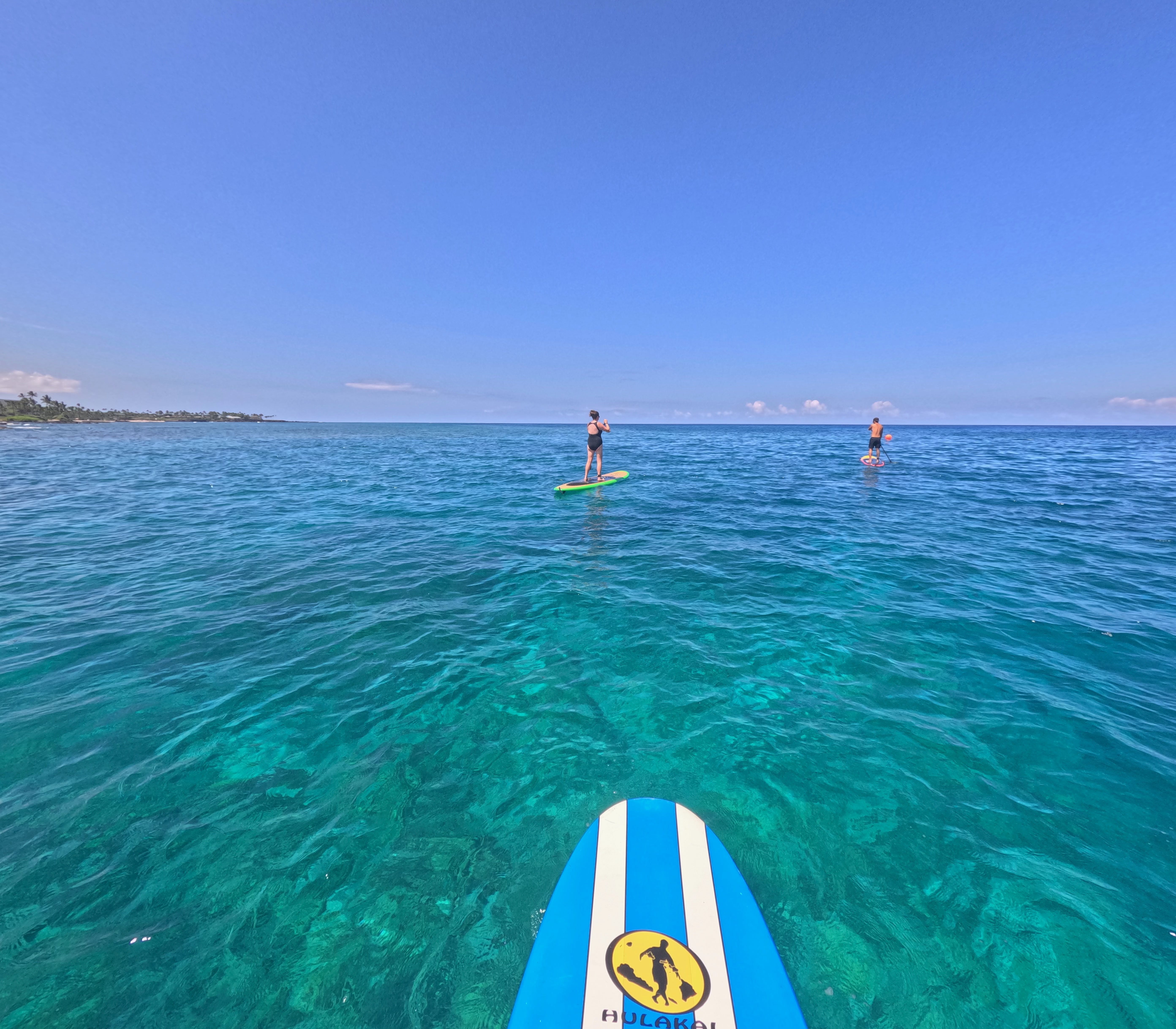
We’d booked a stand-up paddleboard tour that took us out of the protected lagoon at the resort and into the open ocean. Just us and a guide who talked the entire time... and I mean the entire time. Island history, family stories, reef ecology, fishing techniques, weather patterns. He also mentioned a school trip to Volcano years ago, and like the canoe guide, said it was way too cold up there for him. He was enthusiastic and knowledgeable and didn’t stop for almost two hours.
It was a lot of information. But it was fun, and paddling in the open ocean felt like an accomplishment.
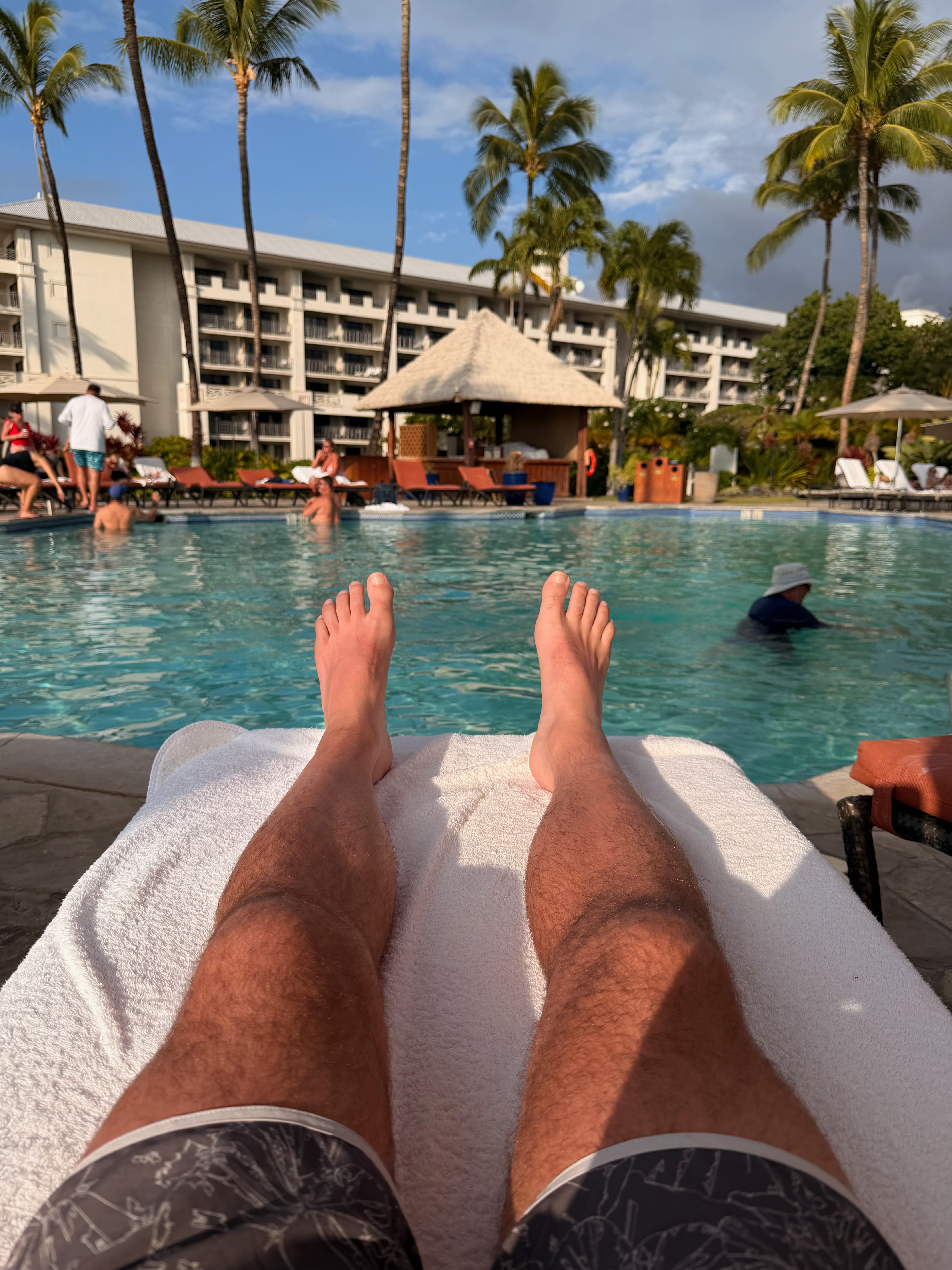
The rest of Thursday was spent at the pool, reading and swimming and finally just being still.
We’d been tracking the weather forecast for Mauna Kea all week, hoping for a clear night to drive up to the Visitor Information Station for stargazing. At 9,200 feet elevation, it’s supposed to be one of the best accessible stargazing sites in the world. But the observatory’s weather page read like it was written for meteorologists... cloud coverage percentages, atmospheric stability indices, wind speeds at different elevations. I kept feeding the updates to ChatGPT, asking it to translate: Is this worth the two-hour drive or not?
Every day, the answer was some version of: probably not.
We could see Mauna Kea from the resort, but we could never see the top. The clouds just weren’t cooperating. By Thursday evening, I checked one more time. ChatGPT’s analysis was clear: the summit forecast showed near-total cloud cover with no improvement expected. We’d have driven two hours up a winding mountain road in the dark to stare at fog.
So instead, we had dinner after sunset at the Luana Lounge, which sits on a balcony overlooking the resort grounds. A mai tai. An evening where we didn’t have to think about logistics or schedules or what came next.


Friday was a beach day.
We rented a covered daybed and spent most of the day reading, swimming, and letting the hours disappear. We did our own snorkeling off the resort beach and saw more fish... and a moray eel tucked into the rocks, just its head poking out. The water wasn’t as clear as it had been during the guided tour, but it was still good enough to enjoy.
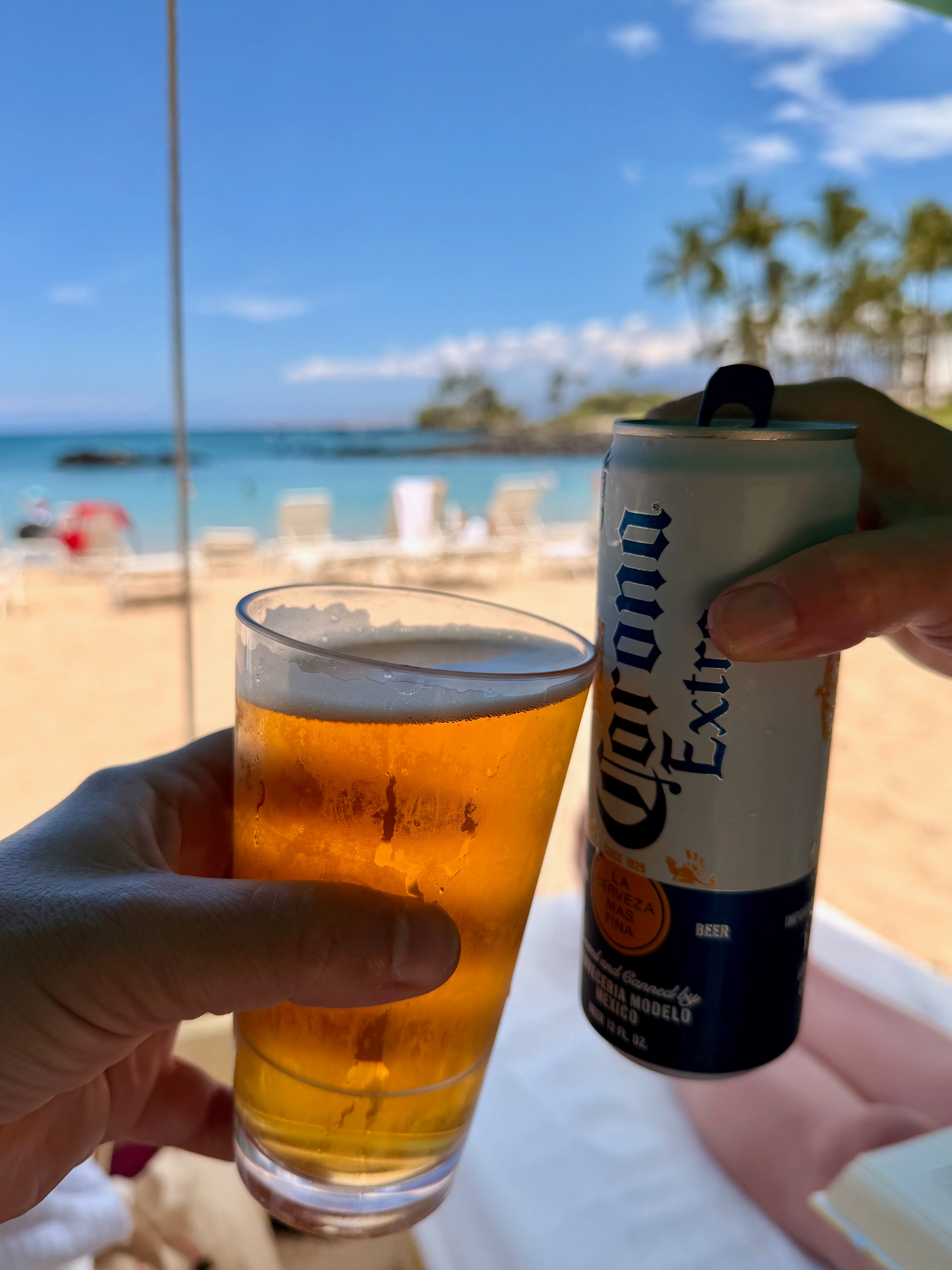
The resort had a rhythm to it by now... early coffee for me and tea for Nicole with açaí bowls by the beach, mid-morning in the water, lunch delivered to wherever we’d set up camp, afternoon naps, sunset drinks, dinner somewhere on the property.
It felt exactly like what we’d needed after the hiking and driving and constant movement of the first half of the trip.
Saturday morning, one of the pool attendants we’d been chatting with all week gave us a recommendation.
“If you walk north on the beach trail, past the resort boundary, there’s another beach about ten minutes away. The snorkeling there is even better than here. Crystal clear water. Lots of coral. And you’ll probably see turtles.”
We grabbed our snorkeling gear and followed the trail.
He was right.
The water was the clearest we’d seen the entire trip. The sunlight hit it perfectly. The coral was vibrant. And within a few minutes, we saw a sea turtle just hanging out near the rocks, coming up for air and then diving back down to graze on algae.
We watched him for a while, keeping our distance, just floating and observing.
Then we swam out toward deeper water... toward what looked like a drop-off where the ocean floor suddenly fell away. In Finding Nemo, they call it “the drop off.” That’s what this felt like. You’re swimming along in maybe twenty feet of water, and then suddenly there’s nothing below you but deep blue emptiness.
It was beautiful and a little unsettling at the same time.
I went back out by myself later that afternoon and found another turtle. This one let me follow him for a while as he surfaced for air, dove back down, and munched on algae growing on the rocks.
I stayed out there longer than I meant to, just watching. It felt like the perfect way to end our time in the water.
That night was the resort’s luau.
Traditional Hawaiian food... kalua pork, poi, lomi salmon, haupia for dessert. Cultural performances with hula dancing, fire dancing, and storytelling about Hawaiian history and traditions. We sat at a long table with other couples and families, chatting and laughing and enjoying the show.
It was touristy, sure. But it was also genuinely fun. And it felt like a fitting way to spend our last night at the resort.


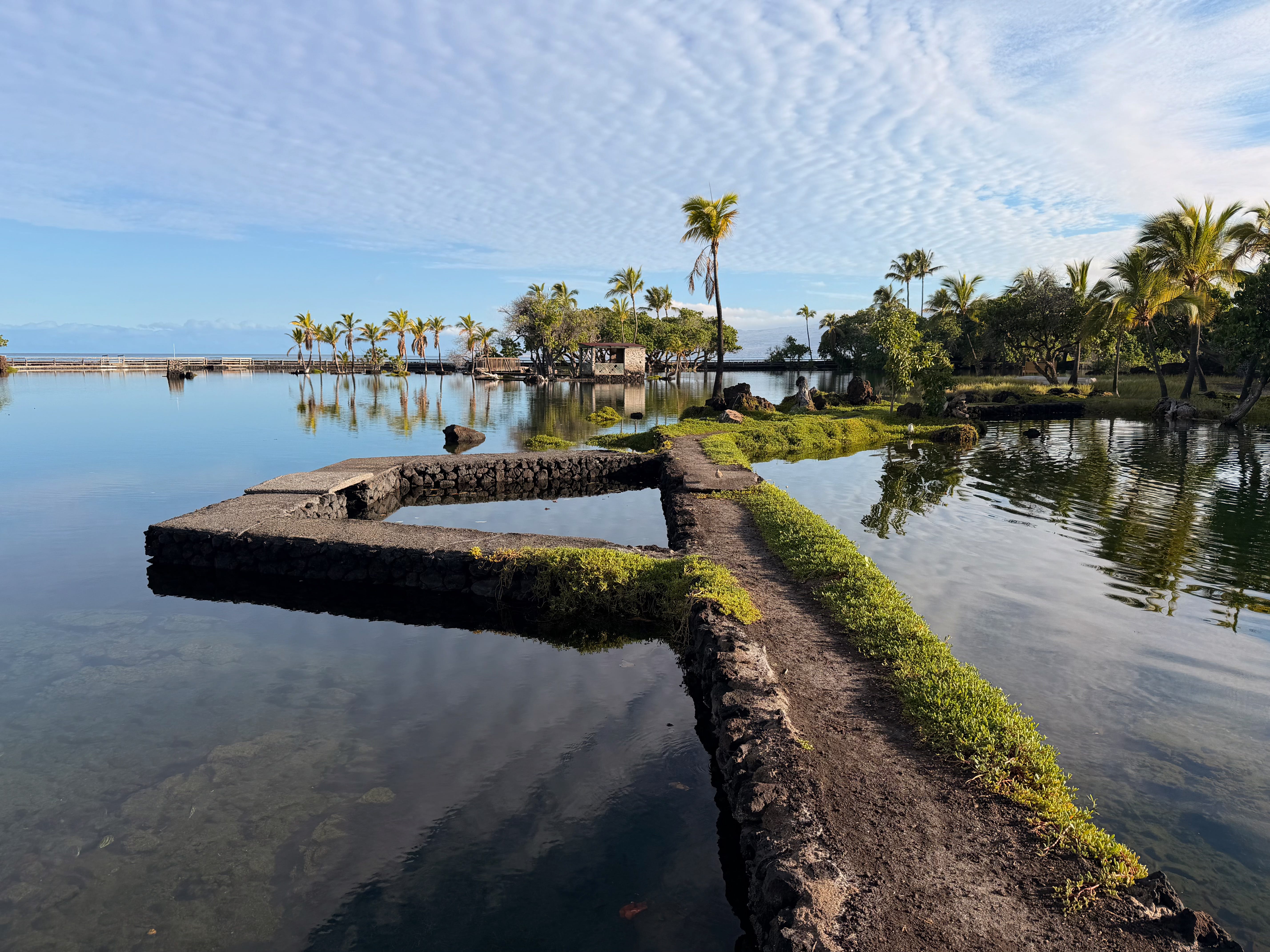
Sunday morning, we watched the sunrise over the mountains one last time... me with coffee, Nicole with tea... by the pool. Then we walked south on the beach trail to see the historic Hawaiian fish ponds... stone-walled enclosures where ancient Hawaiians had figured out how to create a mix of salt and fresh water. Young fish would swim in through small openings to feed, then grow too large to escape.
It was a small thing, but it felt like a fitting bookend to the trip... seeing one more piece of history before we left.
We packed up, checked out, and loaded the car.
Our flight didn’t leave until 10 p.m., so we had a full day to explore the southern part of the island. We used the GuideAlong app again, stopping at scenic overlooks and little towns along the way. We had lunch at the southernmost restaurant in the United States and bought pastries at the southernmost bakery in the United States.
Then we drove back to Kona to explore the downtown area and buy souvenirs.
We found a restaurant overlooking the water and sat down for our last Hawaiian meal. A large cruise ship sat offshore, and we watched the tenders ferry passengers back and forth between the ship and the dock.
I wondered out loud where they stored those tenders when the ship was at sea.
Nicole laughed. “Just ask Perplexity.”
So I did.
Turns out the Celebrity Edge stores its tenders in special compartments built into the sides of the ship... recessed alcoves on Deck 2 with shell doors that open to deploy them. The “Magic Carpet,” a moving platform on the ship’s side, can raise and lower to help with tender operations. The design keeps the tenders protected from the elements and makes loading passengers more efficient.
It was one of many random questions we’d asked ChatGPT or Perplexity throughout the trip... identifying plants and birds, figuring out routes, looking up historical details, decoding weather forecasts. Just having that tool available in your pocket changes how you experience things. You don’t have to wonder. You can just know.
The sun set one last time. The tenders kept shuttling. And we sat there soaking in the last hour of the trip before heading to the airport.
Next: Part 6 - What It All Means (or: how planning became a conversation)
Very nice!