

The Drive, The Doubt, and the Dark Pacific
A Bucket List Trip, Powered by AI | Part Four

Earlier this year, I planned a bucket list vacation with the help of AI… a 25th anniversary trip five years in the making. This is Part 4 of a six-part series about planning, adventure, manta rays, and learning to think out loud with a machine. Start from the beginning here.
The thing about trust is that it builds slowly, one decision at a time.
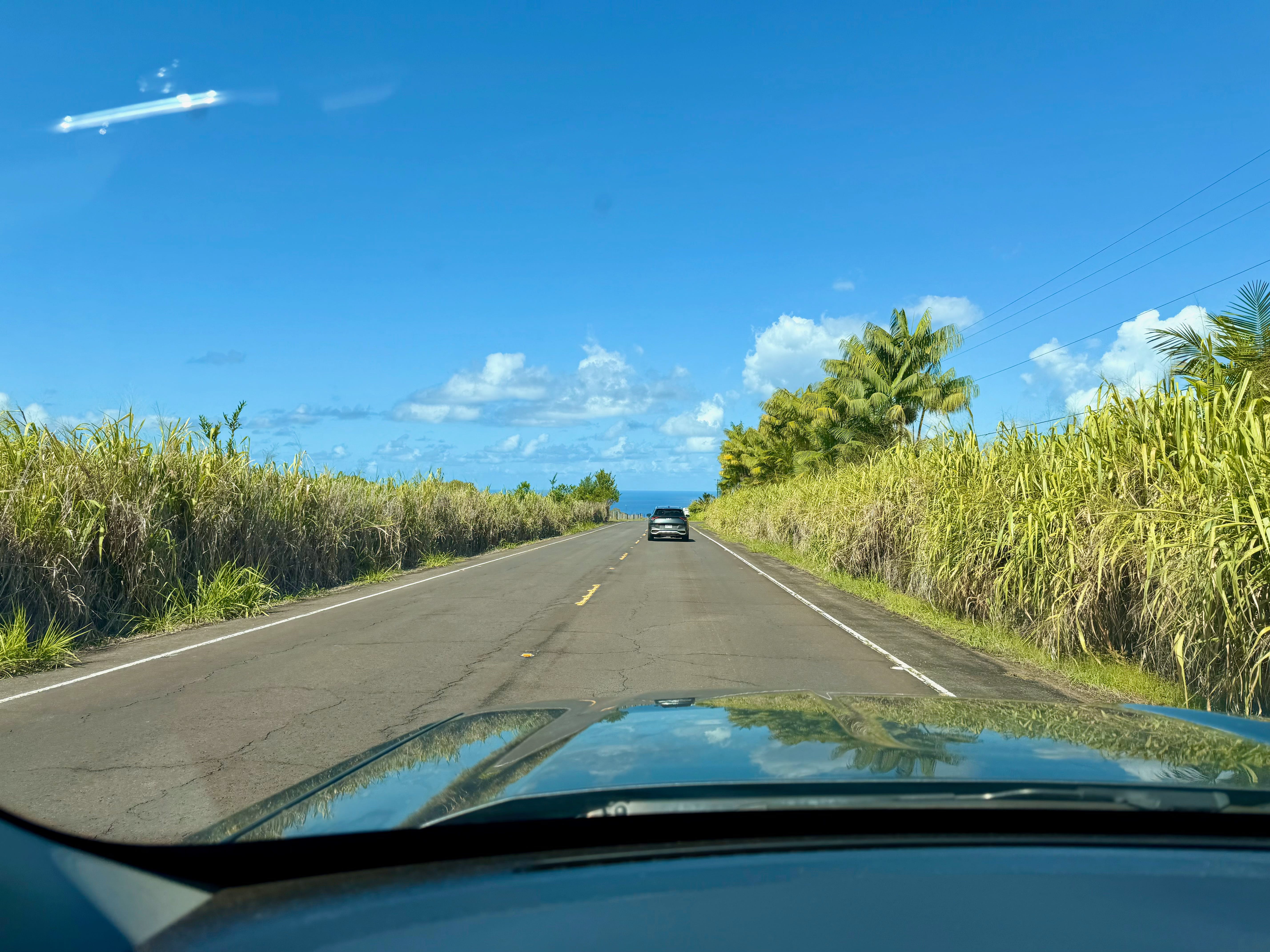
The drive from Volcano Village to the Fairmont Orchid on the Kohala Coast takes just about two hours without stops, but it doesn’t feel like that. It feels like crossing through three or four different worlds, each one surprising in its own way.
We left Volcano in the morning on our anniversary. ChatGPT had laid out the route the night before: north through Hilo, up the Hamakua Coast, with a couple of stops that would turn a straight drive into something worth remembering.
The first stop was Rainbow Falls, right in Hilo. A quick pull-off, a short walk, and there it was... an eighty-foot waterfall plunging into a pool surrounded by lush jungle. We stood there for ten minutes, took some photos, then kept moving.
From there, we drove into downtown Hilo for lunch. Just as we sat down outside under the lanai at Hilo Bay Cafe, a woman leaving leaned over our table on her way out and said, unprompted, “The crab cake salad is to die for.”
She was right. Best crab cake salad I’ve ever had.
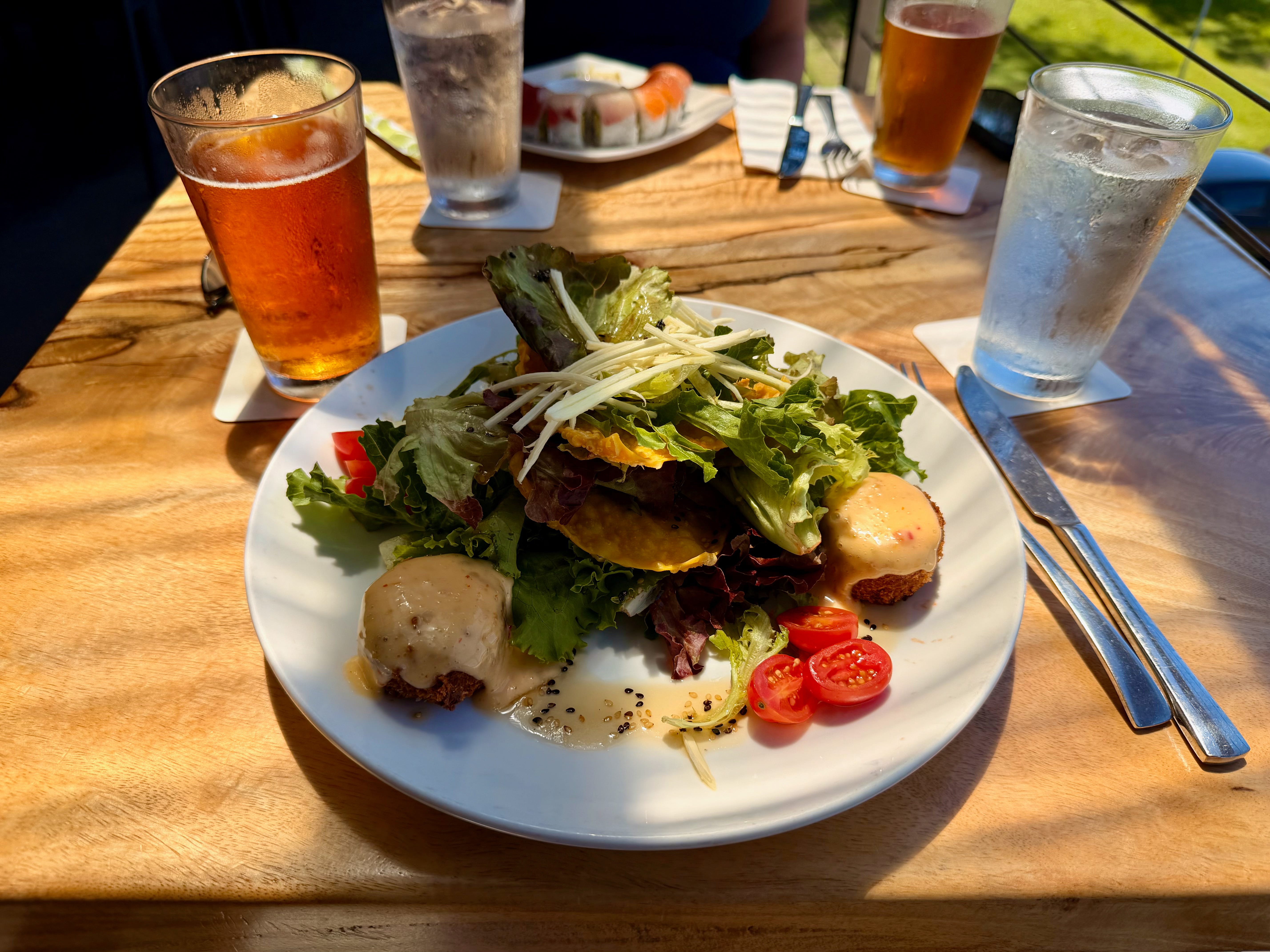
We sat overlooking Hilo Bay, watching the water and Mauna Kea rising in the distance, planes arriving from the other islands at the airport nearby. It was the kind of lunch that felt like it belonged in the trip... not rushed, not touristy, just right.
After lunch, we got back on the road and headed up the Hamakua Coast. This is where I pulled out the GuideAlong app again, the same GPS-based audio tour we’d used at Volcanoes National Park. The voice narrated through the car speakers as we drove, pointing out landmarks, telling us the history of the area, flagging scenic lookouts where we could pull over if we wanted.
One of those stops was Akaka Falls. We parked and hiked the short loop trail through thick jungle. The path led to a viewpoint where you could see the waterfall... 442 feet, dropping straight down into a gorge surrounded by green so thick it looked fake. We stood there, watched the water fall, listened to the roar, then walked back to the car.
The drive continued north, the landscape shifting again. The jungle thinned out. Rolling green hills appeared. Pastures. The GuideAlong narrator told us about the ranching history of the area near Waimea, how Hawaii has had cowboys and cattle ranches for nearly two centuries. I had no idea.
It felt surreal. We were still in Hawaii, but the landscape looked nothing like what we’d imagined. Open pastures. Rolling hills. This could’ve been Montana.


Photos: Views from our drive up the Hamakua Coast.
As we got closer to the coast, the landscape slowly transitioned back. The green faded. The black lava fields returned, stark and dramatic against the ocean.
By the time we pulled into the Fairmont Orchid’s entrance, we’d seen waterfalls, jungle, ranches, lava fields, and coastline. The drive hadn’t just been a way to get from one place to another. It had been part of the trip.
But as we turned onto that long, manicured driveway (tropical landscaping, perfectly trimmed hedges, valet parking), Nicole and I both felt it at the same time.
“This feels... different,” I said.
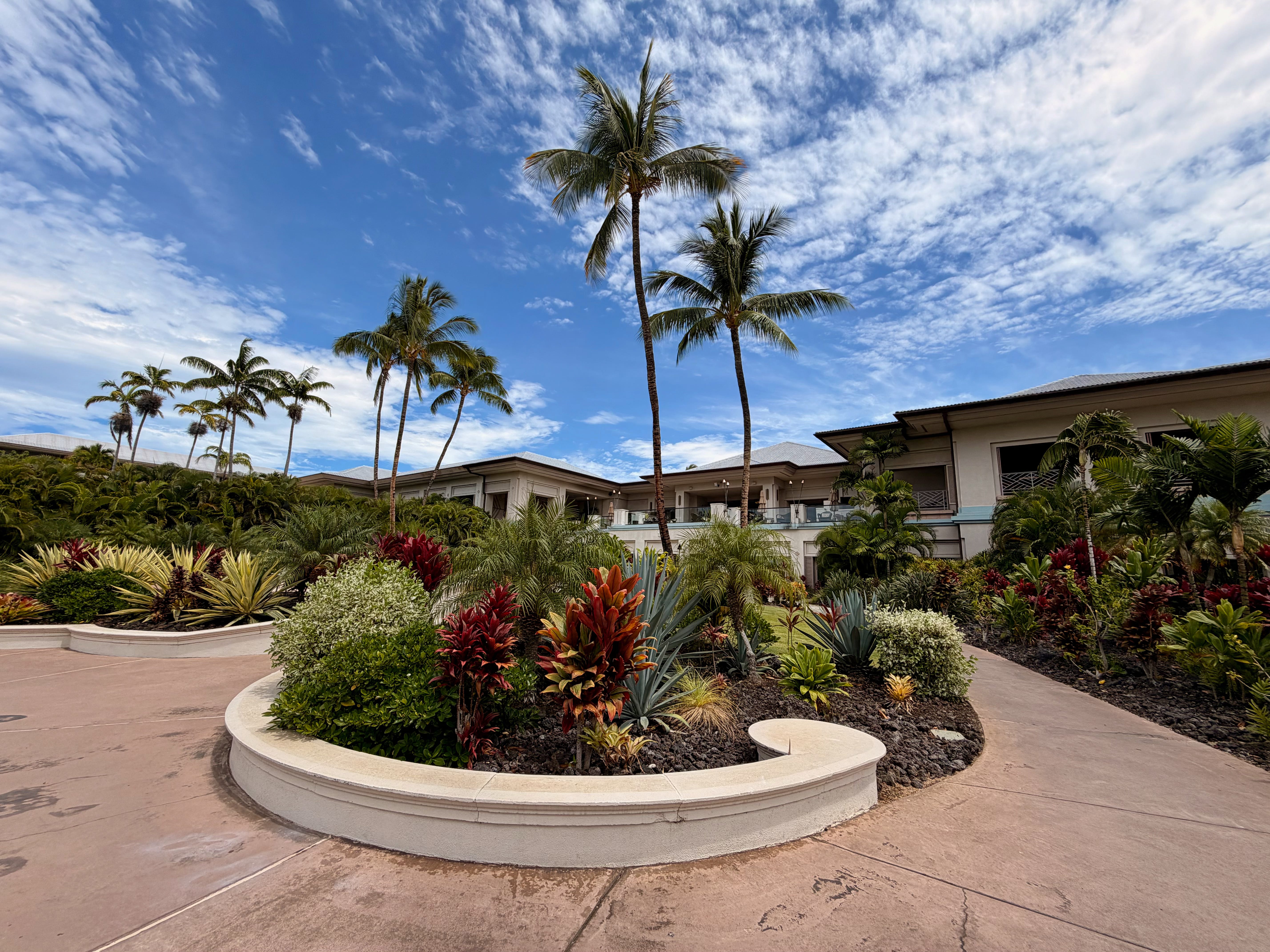
We’d just spent three nights at Volcano Village Lodge, this cozy, intimate place where breakfast was delivered to your room and the only sound at night was rain on the roof. This was bigger. More polished. The kind of place where you could imagine conference rooms tucked away somewhere behind the lobby (there were).
Corporate.
I felt a flicker of doubt. Had we made the wrong call?
Then we checked in. Walked through the property. Found our room.
And I realized: ChatGPT had been right.
The Fairmont wasn’t trying to be Volcano Village Lodge. It wasn’t supposed to be cozy and tucked away. It was open, spacious, restorative in a completely different way. Our room had a view of the ocean and the golf course. Nothing to write home about, really. The room was nice, but it wasn’t the room that made this place special.
It was everything else.
The beach was steps away: calm, swimmable, lined with lounge chairs but never crowded. There was a quiet pool surrounded by gardens. Everything felt designed for one thing: slowing down.
This was exactly what we needed after the intensity of the volcano and the long drive. A place to breathe. To sit. To not do much of anything.
The doubt we’d felt in the driveway evaporated.
By this point in the trip, I’d stopped questioning whether the AI planning would pan out. Volcano Village had been perfect. The Fairmont was perfect in a completely different way. This wasn’t luck anymore. This was actually working.


Photos: Various spots on the Fairmont Orchid property.
The manta ray night snorkel had come up early in the planning. ChatGPT mentioned it as one of the “must-do” experiences on the Big Island, tucked into a longer list of activities. Nicole latched onto it immediately. She brought it up several times in the weeks before the trip, each time with a little more excitement.
I didn’t overthink it. It sounded amazing. Unique. The kind of thing you can’t do anywhere else.
So I booked it.
I didn’t fully understand what I was signing up for.
Here’s what it actually looks like:
Twenty-four of us, all in wet suits, loaded onto a rigid inflatable boat (the kind military special forces use). The boat is called the Orca. That should’ve been a clue.
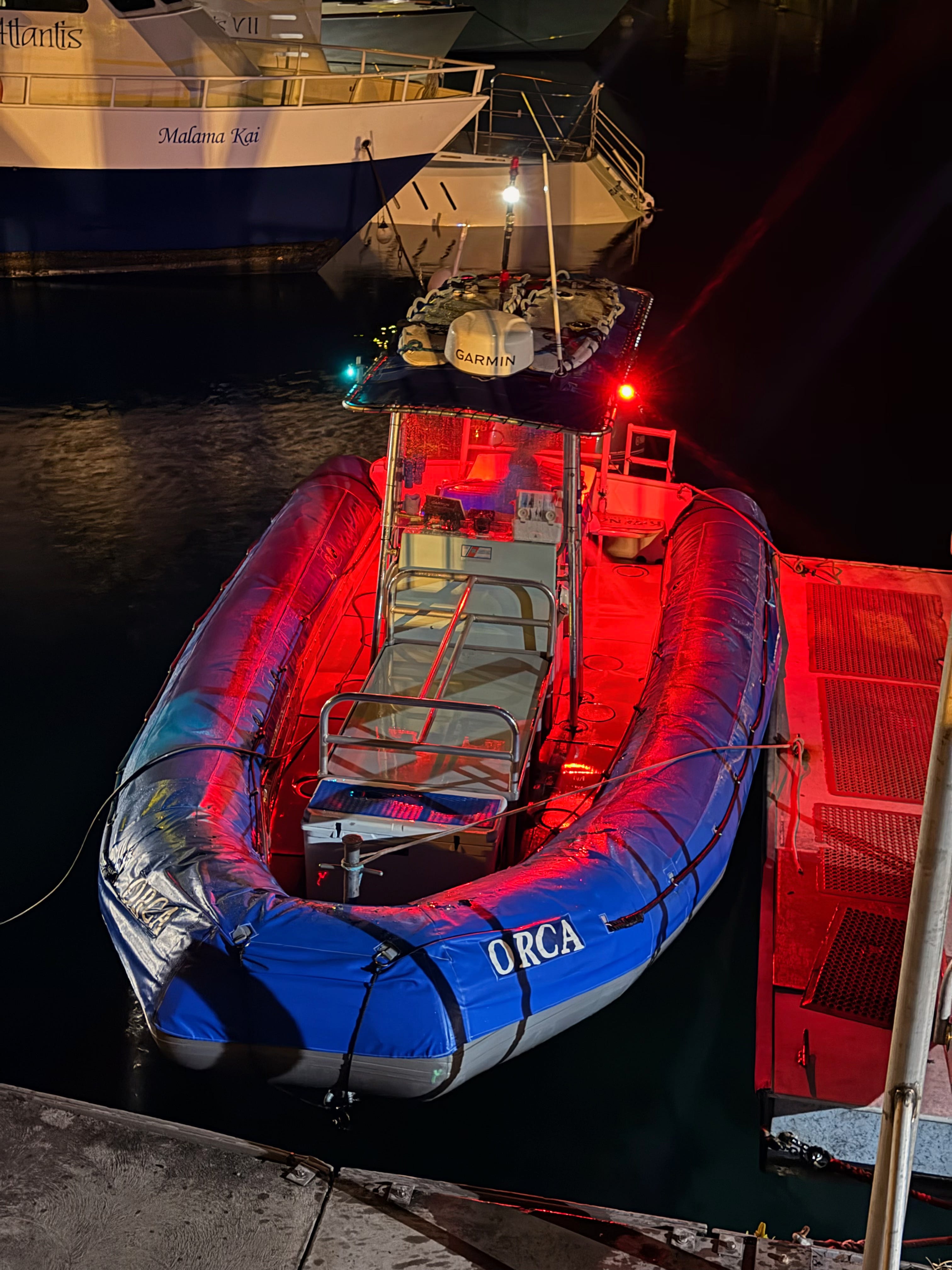
We speed out into the dark Pacific for at least fifteen minutes, though it feels longer. The ocean is black. The boat slams over waves. The engine roars. We sit facing outward, holding on, wind and salt spray hitting our faces.
It’s terrifying and exhilarating at the same time. Like we’re on a Navy SEAL mission instead of a tourist activity.
When we finally stop, the guides give us instructions: hold onto the floating platform, face outward, keep your arms and legs still. The lights below will attract the mantas. Just float. Just wait.
But first, we have to get in.
We’re sitting on the gunwale of the boat, wet suits on, the dark Pacific stretching out in every direction. The guide tells us to drop into the water. I look down. I can’t see anything. Just black.
I force myself not to think. Just go.
I push off and drop.
The water is warm. Warmer than I expected. I surface, grab the platform next to Nicole.
Then we’re floating. Looking down into darkness. Waiting.
It’s one thing to understand the concept intellectually: mantas eat plankton, plankton are attracted to light, so we float above the lights and the mantas come to feed. It’s another thing entirely to be in the open ocean at night, looking down into darkness, waiting for something massive to appear below you.
The first manta I see is enormous. Fifteen feet across, maybe more. It glides up from the deep, silent and weightless, wings moving in slow, hypnotic waves. It sweeps just below me, close enough that I could reach out and touch it (though we’re told not to).
Then another one. And another.
They’re everywhere. Circling. Rising. Feeding. Moving with a grace that doesn’t seem possible for something that size. I can see their white underbellies, their gaping mouths filtering plankton from the water, their dark eyes reflecting the lights.
It’s beautiful. It’s surreal. It’s also still a little terrifying.
I glance over at Nicole. She’s mesmerized, her face half-submerged, watching a manta glide directly beneath her. I can see it in her eyes through the mask: the same mix of fear and awe I’m feeling.
For the next forty-five minutes, we just float there. Witnessing something most people will never see.
On the boat ride back (just as wild, but with the brilliant stars filling the dark sky above us, it felt almost peaceful), Nicole looked at me.
“I didn’t realize that’s what we signed up for.”
“Neither did I,” I said.
She laughed, and I did too. The kind of laugh that comes after you’ve done something terrifying and survived it and can’t quite believe it happened.
If I’d known exactly what the experience would be like (how dark the water would be, how big the mantas were, how exposed I’d feel), I might have talked myself out of it. Nicole might have, too. But we didn’t know. We just trusted the recommendation. Booked it. Showed up.
Here’s the thing I’m realizing: I’m not sure we’d do it again. It was that intense. But I’m so glad we did it. It pushed me outside my comfort zone in a way I didn’t expect. And now we’d done something unforgettable.
That’s the paradox of trust. Sometimes the best experiences are the ones you wouldn’t choose if you knew exactly what they’d be like.
Back at the Fairmont that night, sitting on the balcony with the sound of waves in the background, I realized something:
I’d stopped thinking about the planning.
I wasn’t analyzing whether ChatGPT’s suggestions were working out. I wasn’t second-guessing decisions or wondering if we should’ve done something differently. I was just here. Living the trip we’d planned.
The tool had done its job. It helped me narrow options, think through logistics, and make informed choices. But now it was out of the way. I wasn’t thinking about AI. I was thinking about manta rays. About the way Nicole’s face lit up at the volcano. About rainforests and waterfalls and cowboy country and crab cake salad and coffee in an Adirondack chair overlooking the Pacific.
Good tools don’t demand attention. They help you make decisions, then they disappear so you can live the life you chose.
The next morning, we woke up early. Went down to grab coffee for me, tea for Nicole. Then we walked out to the ocean and sat.
The water was calm. The sky was just starting to lighten. Somewhere out there, mantas were still gliding through the water, feeding in the dark.
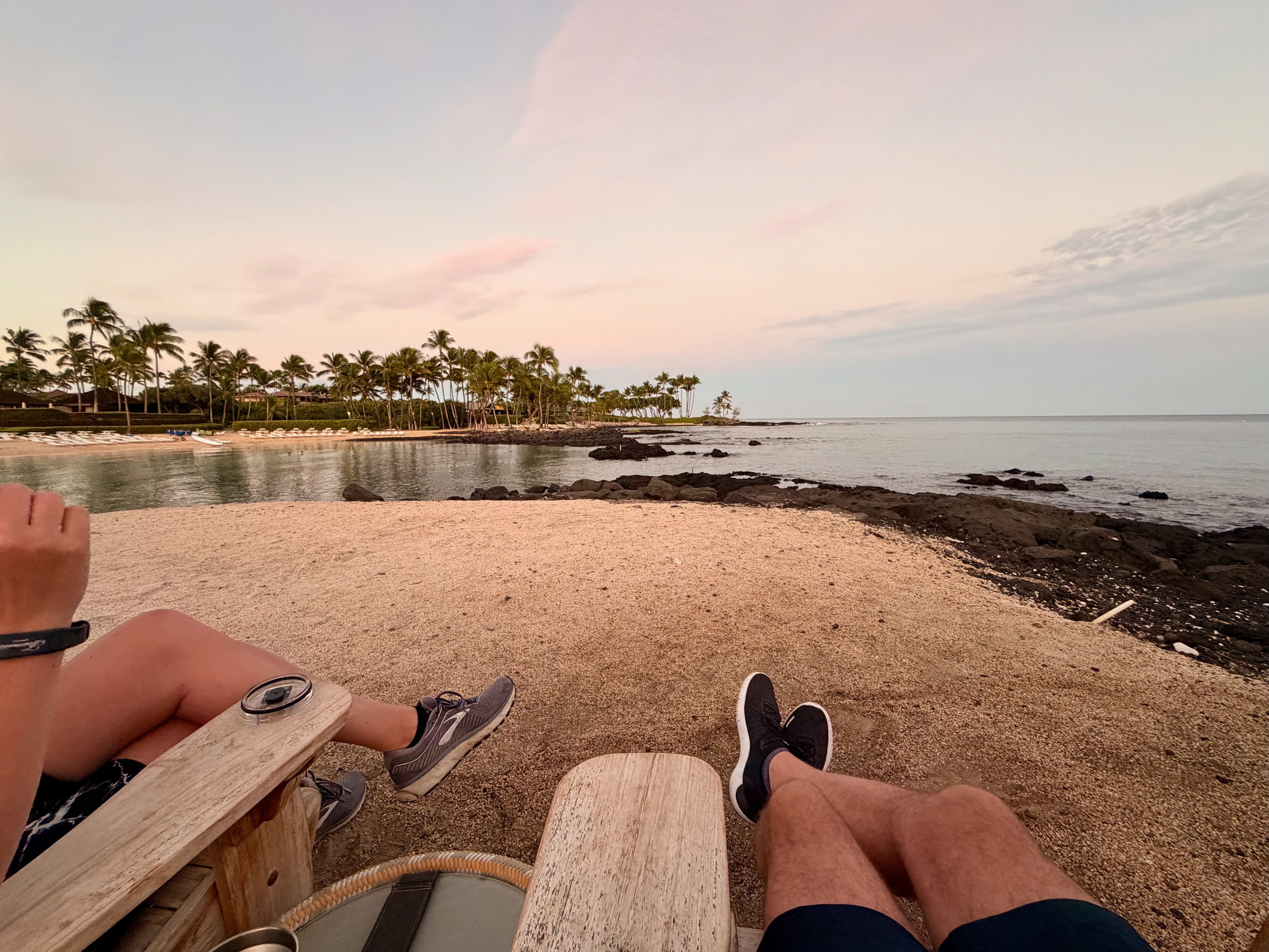
I’d almost doubted this place. Almost questioned whether we’d made the right call.
But we had.
And I was learning to trust that.
Fabulous read…great job!