

Thinking Out Loud
A Bucket List Trip, Powered by AI | Part Two

Earlier this year, I planned a bucket list vacation with the help of AI… a 25th anniversary trip five years in the making. This is Part 2 of a six-part series about planning, adventure, manta rays, and learning to think out loud with a machine. Start from the beginning here.
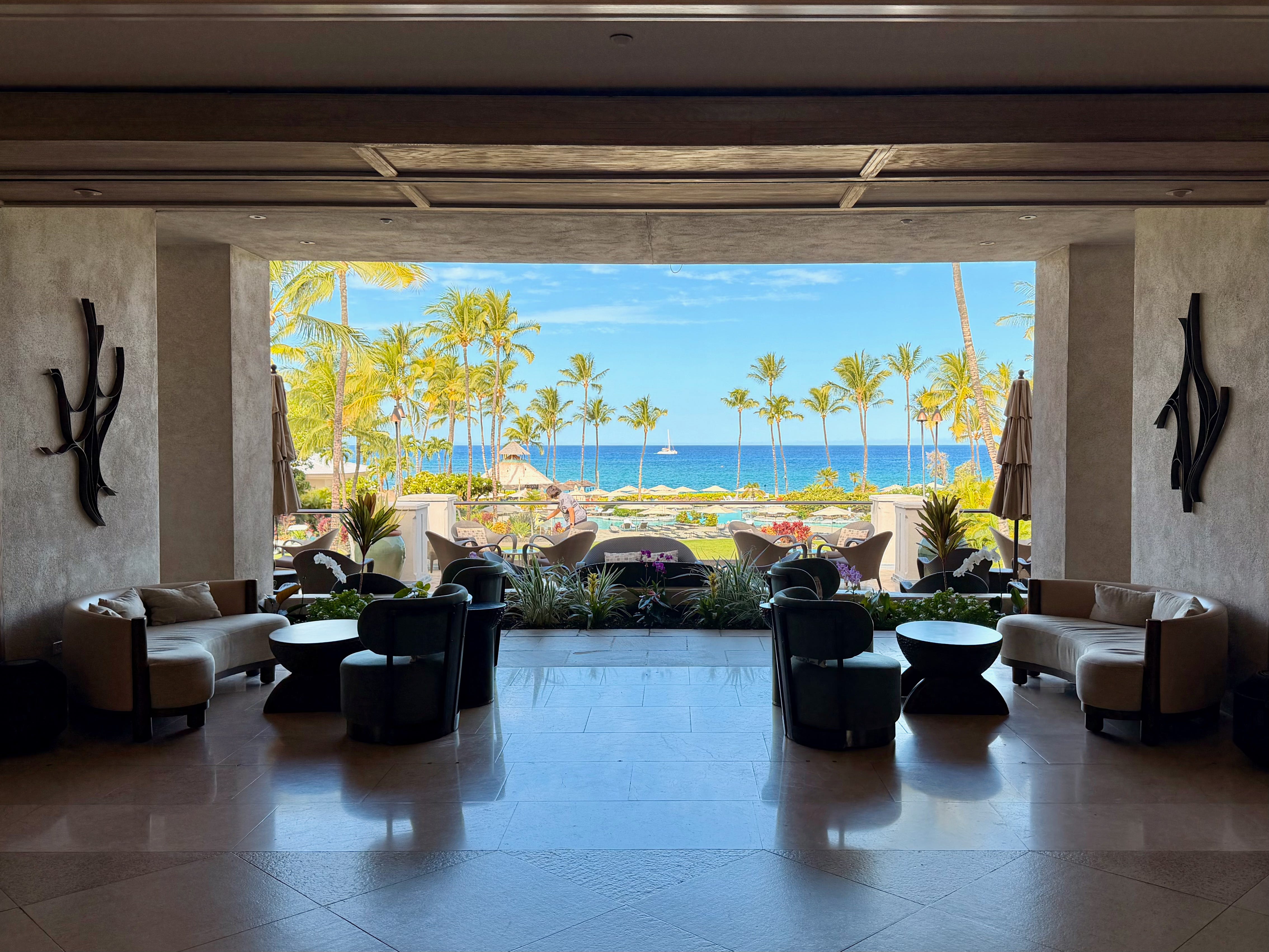
Photo: View from the lobby of the Fairmont Orchid
Here’s what planning a trip usually looks like for me:
Open Google. Type something like “best places to stay in Hawaii.” Click the first three articles. Open TripAdvisor in another tab. Start reading reviews. Someone loved the hotel. Someone hated it. Someone says the beach is perfect. Someone says it’s too rocky. Open another tab for flights. Check prices. Get distracted by a different island. Open a Reddit thread from 2019. Read seventeen conflicting opinions about whether September is too rainy.
Three hours later, I have forty-two tabs open, a vague sense of information overload, and no actual decisions made.
This time felt different from the start.
The real work happened in the in-between moments, during planning and throughout the trip itself.
Once we’d settled on the Big Island and the basic structure… adventure first, resort second, the conversation shifted from “what” to “how.” And that’s where things got interesting.
I’d ask a question. ChatGPT would answer it. Then it would ask a follow-up question I hadn’t thought about.
What’s the best route from Volcano to the Fairmont?
It gave me two options: the southern route along Highway 11 (the way we’d drive in from Kona) or the northern route back through Hilo and up the coast.
Then: You’ll already be driving through the southern part on the way in. Do you want to see something new on the way to the resort, or would you rather take the faster, more direct route?
I paused. I hadn’t thought about it that way. Of course I wanted to see something new.
What’s worth seeing on the northern route?
Rainbow Falls. Akaka Falls State Park. The scenic coastline. Cowboy country near Waimea… yes, Hawaii has cowboys and ranches. Then it asked what time we needed to check in at the resort and worked backward to build a timeline, including a lunch stop at Hilo Bay Cafe.
This wasn’t just answering questions. It was helping me design the day in a way that made sense… not rushed, not wasting time, just right.
That happened over and over. I’d ask about activities, and it would flag logistics I hadn’t considered. I’d mention wanting to snorkel, and it would suggest bringing our own gear instead of using resort equipment because the fit and quality would be better. I’d ask about stargazing at Mauna Kea, and it would check the weather patterns for late September and tell me we’d likely need a backup plan because cloud cover was common that time of year.
It wasn’t doing the thinking for me. It was doing the thinking with me.
The lodging choices forced me to get honest about what we actually wanted.
For Volcano Village Lodge, the decision was easy. Private cabins in the rainforest with fireplaces and views… it matched exactly what I wanted for that part of the trip. The photos looked perfect. I booked it.
The beach resort was harder.
When I said I wanted something that felt like season one of The White Lotus… open-air, everything blending indoors and outdoors… ChatGPT gave me a list of nine hotels in three tiers: luxury, midrange, budget.
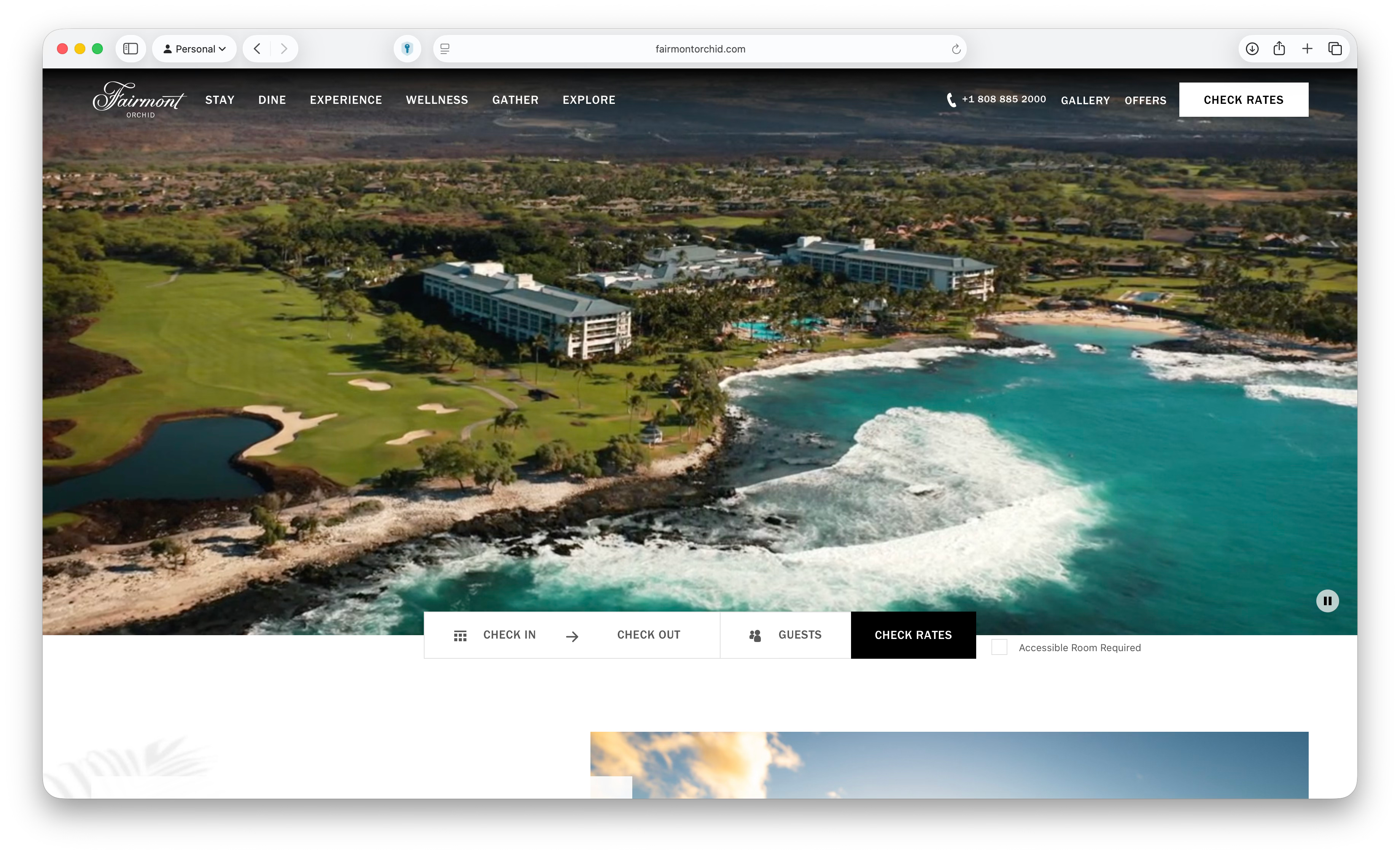
I clicked through all of them. The Fairmont Orchid kept pulling me back. The beach looked perfect. The photos matched the vibe I wanted. But the price made my stomach hurt.
I kept going back to the OUTRIGGER Kona Resort. Nice. Well-reviewed. A lot cheaper. I’d look at the Fairmont, feel my stomach clench, then click back to the OUTRIGGER and think, This is fine. This is totally fine.
Finally, I asked ChatGPT directly:
Am I being ridiculous spending this much on a hotel when the OUTRIGGER looks perfectly fine?
It didn’t hype me up or tell me to treat ourselves. It gave me a framework:
The Fairmont offers a larger property, a better beach for snorkeling, more on-site dining, and a more “destination resort” feel. The OUTRIGGER is great if you’re planning to spend most of your time off-property exploring. Since you’re planning to relax at the resort for five days after hiking, the Fairmont might be worth it. But if budget is a concern, you’ll be happy at the OUTRIGGER too.
That helped me realize what I was actually deciding: Was this trip about checking boxes and seeing sights, or was it about creating a specific feeling for our 25th anniversary?
The Fairmont wasn’t just a hotel. It was the place where we’d slow down, decompress, watch sunsets, and not think about logistics for five straight days.
We booked it. And I stopped second-guessing.
Then came the activities I didn’t know I wanted.
I knew we’d snorkel. I figured we’d do some beach time. Maybe a hike or two outside the national park. Standard stuff.
But ChatGPT flagged things I’d never heard of.
Have you considered a guided outrigger canoe and snorkeling tour? The Fairmont offers one that’s intimate… just you, your partner, and a local guide. You paddle out together and snorkel in a less crowded bay.
That sounded perfect. Booked.
There’s also nighttime snorkeling with manta rays off the Kona coast. Tour operators use UV lights to attract plankton, and the manta rays come up to feed.
That sounded cool. I pictured small rays in a calm bay close to shore. Something peaceful and magical. I booked it without looking too deep into the details.
I had no idea what I’d actually signed us up for.
None of these were things I would’ve found through normal research. They weren’t on the top of Google results. They weren’t in the “Top 10 Things to Do” listicles. They emerged through conversation… because I’d been feeding ChatGPT context about what we liked over weeks, and it was connecting dots I wouldn’t have connected on my own.
There were also things it couldn’t do.
It couldn’t book anything. I still had to go to hotel websites, read cancellation policies, compare photos, and click “reserve.” It couldn’t tell me whether the Fairmont was objectively worth the money… it could only help me think through what mattered to us.
It couldn’t make the manta ray decision for me. That was a leap I had to take on my own.
And it couldn’t tell me if the trip would actually work… if the pacing would feel right, if the itinerary would hold up in real life, if the places would live up to the descriptions.
But here’s what it did do: It processed more information than I ever could… every article, every review, every forum post, every travel guide… and synthesized it into something I could actually use. It remembered what I’d told it three weeks ago and used that context to shape suggestions now. It didn’t overwhelm me with options; it helped me narrow them down.
And when I asked questions, it didn’t just answer. It asked better questions back.
By the time we landed in Kona, I wasn’t second-guessing anything.
I wasn’t wondering if we should’ve stayed somewhere else or structured the trip differently or skipped an activity. I wasn’t lying awake at 2 a.m. googling “is the Fairmont Orchid worth it” for the fifteenth time.
I felt confident. Ready. Excited.
We had a plan that made sense. And for the first time in years, planning a big trip didn’t feel like drowning in information.
It felt like thinking clearly about what we actually wanted—and then going out and doing it.
Next: Part 3 – Where Expectations Get Quietly Exceeded
Very good. Really enjoying reading about the processes.